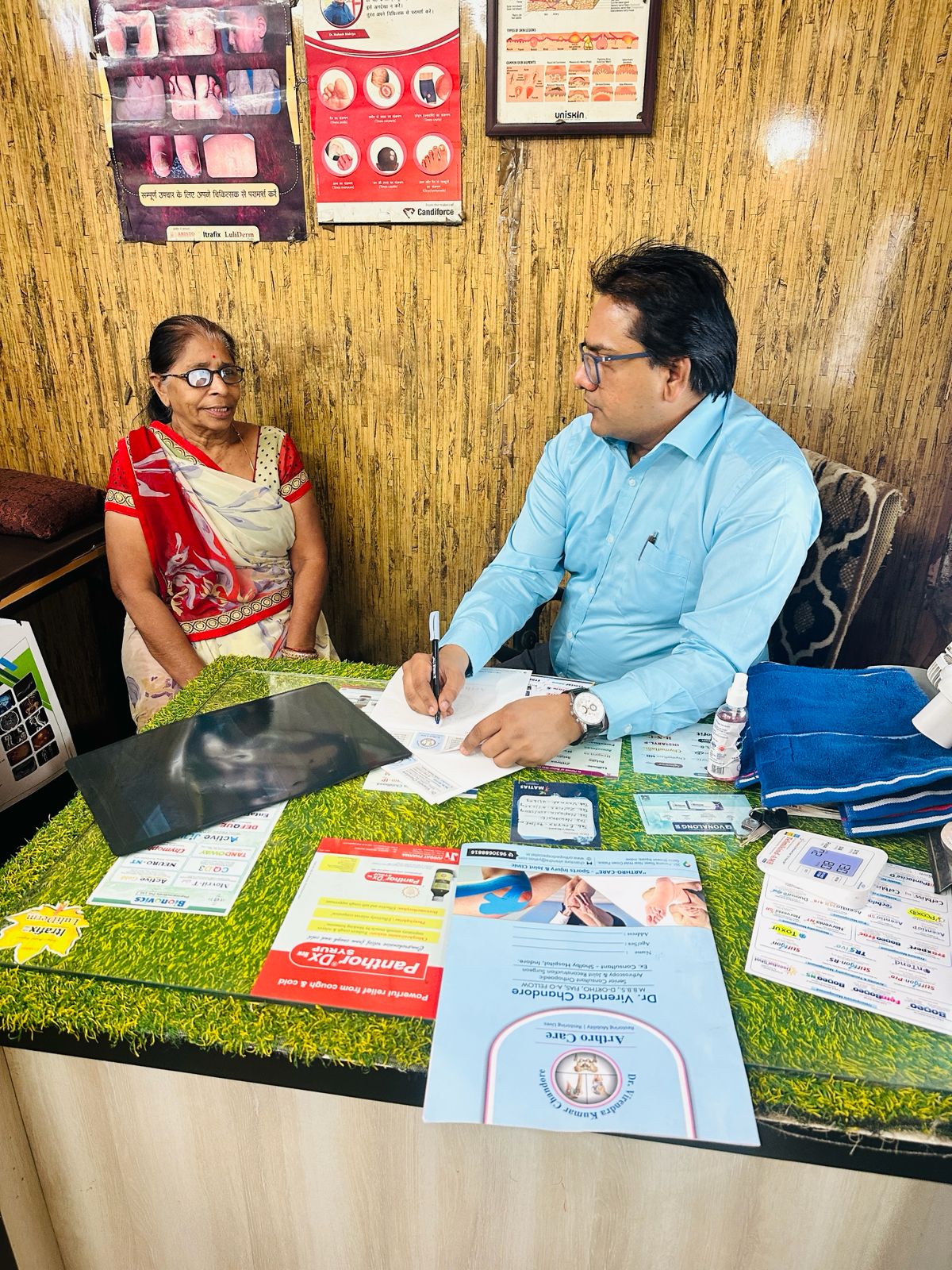
By Dr. Virendra Chandore, Orthopedic Surgeon, Arthocare, Indore
Last month a patient walked into my clinic at Arthocare, limping slightly, and said something I hear almost every week. “Doctor, my knee is feeling better now, do I still need to do anything about it?” He had torn his ACL three weeks earlier playing football, rested it, and the swelling had gone down. So in his mind, the problem was solved.
It wasn’t. And this is genuinely one of the most common misunderstandings I deal with as an orthopedic surgeon.
So let’s settle it here. Can an ACL tear heal on its own? Not really, no. Once it’s torn, especially fully torn, it stays torn unless treated. But there’s more nuance to this than a simple yes or no, so stick with me.
Looking for a Best ACL Surgeon in Indore visit here.
Why Doesn’t the ACL Just Heal Like Other Injuries?
Your ACL, the anterior cruciate ligament, sits deep inside the knee and keeps it stable. Most parts of the body heal because blood flows in and brings the repair cells needed. Unfortunately, the ACL barely gets any blood supply. That’s just how it’s built.
So when it tears, there isn’t enough blood reaching the torn ends to stitch them back together naturally. Compare this to something like a twisted ankle ligament, which usually heals fine on its own given rest and time. The ACL doesn’t get that luxury. This is exactly why “just resting it and hoping” doesn’t work here, even though the pain and swelling often do settle down within a couple of weeks.
Not Every ACL Tear Is the Same, Though
Here’s where it gets a bit more complicated, and honestly this is the part patients rarely know before walking into a clinic.
If it’s a partial tear, meaning the ligament is stretched or partly damaged but not snapped completely, there’s actually a decent chance of managing it without surgery. Physiotherapy, a good knee brace, strengthening the muscles around the joint, this combination works for a lot of people, especially if they’re not chasing competitive sports.
A complete tear is different. The ligament has literally split into two pieces, and no amount of rest brings those pieces back together. If you play football, badminton, run, or do anything involving quick pivots and jumps, I’ll usually recommend ACL reconstruction surgery in this case. You can technically walk fine without surgery, plenty of people do, but the knee stays unstable underneath, and it tends to show up at the worst times, like suddenly changing direction or stepping off a curb wrong.
But What If I Just Ignore It?
I get this question a lot too, so let’s address it honestly. Ignoring an ACL tear doesn’t mean nothing happens, it just means the damage happens quietly.
An unstable knee, over months and years, puts uneven pressure on the meniscus and the cartilage inside the joint. That uneven pressure is basically a slow setup for arthritis. I’ve seen patients in their 40s and 50s dealing with knee arthritis that traces back to an ACL tear they ignored in their 20s because “it wasn’t hurting anymore.”
Feeling fine isn’t the same as being fixed. That’s really the core of it.
So When Do I Actually Tell Patients They Need Surgery?
Honestly, it depends on the person sitting in front of me, not a fixed rule. At Arthocare, I look at a few things. How old are they, and how active do they want to stay? A 22 year old cricket player and a 55 year old who just wants to walk comfortably need very different plans. Is the knee actually giving way in daily life, or just feeling a bit weak? Is there other damage too, like a torn meniscus alongside the ACL?
If someone wants to keep playing sports, or their knee keeps buckling unexpectedly, surgery is usually the better long-term call. If they’re not particularly active and mainly want stability for regular life, a proper non-surgical rehab plan can genuinely be enough.
Recovery, Whichever Path You Take
Whether it’s surgery or not, physiotherapy isn’t optional. I tell every patient this. It’s not a side note, it’s basically the whole recovery.
With ACL reconstruction, expect around six to nine months before you’re back to full sport, sometimes a bit longer depending on the sport and how consistent you are with rehab. Early weeks are about getting swelling down and movement back, then it shifts into strengthening, and eventually sport-specific drills before you’re cleared fully.
Without surgery, physiotherapy still matters just as much, maybe more, since the muscles around the knee have to compensate for what the ligament can’t do anymore. It also takes a few months, and honestly, it’s not really a one-time fix, it’s more of an ongoing habit to protect the knee going forward.
IF You want Best ACL Surgeon in Indore visit here.
Questions Patients Ask Me Often
Can a torn ACL heal without surgery?
A fully torn ACL won’t heal back together on its own. Some partial tears can be managed without surgery, depending on how active you are and how unstable the knee actually feels.
How do I even know if I’ve torn my ACL?
Usually there’s a pop sound at the moment of injury, swelling that comes on fast within a few hours, and a feeling that the knee might buckle. An MRI and a proper exam, which we do at Arthocare, will confirm it clearly.
Do I have to get surgery no matter what?
No. It really comes down to your age, how active you want to stay, and whether the knee stays unstable during normal movement. Some patients do well with physiotherapy alone.
How long until I’m back to normal after ACL surgery?
Most people need six to nine months before getting back to full sports activity. Everyday walking and basic movement come back a lot sooner though.
Can I still walk with a torn ACL?
Yes, most people can, especially walking in a straight line. It’s the twisting, pivoting, sudden direction change type movements where the knee tends to give trouble.
Will it get worse if I just leave it?
It can, yes. An unstable knee puts extra load on the meniscus and cartilage over time, which can lead to more knee problems down the road, arthritis being the big one.
Where I Land on This
An ACL tear won’t fix itself, that part isn’t up for debate, it’s just how the ligament is built. But that doesn’t automatically mean everyone needs to go under the knife either. It really comes down to your knee, your lifestyle, and how much stability you actually need day to day.
At Arthocare in Indore, this is exactly what I go through with every single patient, looking at their knee, their goals, and their life, before deciding what actually makes sense for them.
Think you might have torn your ACL? Come in and let me take a proper look, I’m Dr. Virendra Chandore, and you’ll find me at Arthocare in Indore. We’ll figure out what’s really going on with your knee, and what makes sense for you specifically.