When you’re playing football or badminton, you plant your foot to quickly change direction. Something gives way in your knee. Sometimes it’s so loud that the person standing next to you can hear it too. You can hardly bend the knee after a few hours since it has inflated like a balloon.
That is typically the first sign of an ACL injury. And if you’ve found this page, it’s likely that you or someone you care about recently experienced something similar.
Let’s examine what’s truly happening in your knee, why this occurs, and—above all—what your options are going forward.
Looking for a ACL Injury Treatment in Indore visit here.
So What Is the ACL, Really?
The anterior cruciate ligament (ACL) is a ligament in the knees that helps to keep the joint stable and prevent excessive movement. When the ACL tears, it produces extreme pain and a loss of stability while walking and performing other activities. In such circumstances, ACL surgery is essential to cure or reconstruct the damaged ligament and is the only approach to relieve severe pain and discomfort.
ACL surgery is the best option for people who have completely torn ACLs and are actively involved in sports or other activities. It is also an appropriate treatment choice for those who have a partial tear but are experiencing extreme pain and instability. The major reason for undergoing ACL surgery is to repair the torn ligament and restore normal knee function.
Typically, the surgery is conducted using arthroscopy. It employs minimal invasion procedures, resulting in small incisions and a camera to provide a comprehensive view of the situation inside the knee.
How is this occurring in the first place?
Most patients are surprised to learn that they can tear their ACL without being hit or tackled. In fact, most tears occur with no contact at all.
The Common Problems:
- Running while cutting sharply—the traditional football or badminton motion
- Landing wrong after a jump, especially with the knee slightly bent and rotated
- Stopping suddenly mid-sprint
- A direct injury to the knee, such as a fall while skiing or a football tackle
- A twist and an abrupt slowdown
- Sudden deceleration combined with a twist
Weak hamstrings, poor landing mechanics, a previous knee injury, or simply playing a lot of pivot-heavy sport all raise your risk. Female athletes also tend to show up more often in ACL injury statistics — the reasons for this are still debated, but anatomical and hormonal factors are usually cited.
What Does It Actually Feel Like?
Not every ACL tear looks dramatic on day one, but most people notice a fairly consistent pattern:
- A pop or snap right when it happens
- Sharp pain that makes you stop whatever you were doing
- Swelling that comes on fast — often within a few hours, not days
- A sense that the knee just isn’t stable anymore
- Trouble bending or straightening it fully
- Pain or hesitation when trying to put weight on it
A word of caution here — sometimes the initial pain settles down within a day, and people assume it wasn’t serious. It’s one of the more common reasons ACL tears get missed early. If the knee felt unstable even once, get it looked at.
How Bad Is “Bad”? The Grading System
Doctors don’t treat every ACL injury the same way, and that’s because tears fall into different categories:
| Grade | What’s Happening |
| Grade 1 | The ligament is stretched, but the knee is still stable |
| Grade 2 | Partial tear — some looseness starts showing up |
| Grade 3 | Complete tear — the ligament has split, and the knee is genuinely unstable |
Most athletes and active patients who end up needing surgery fall into Grade 3.
Getting a Proper Diagnosis
If you walk into a clinic with a suspected ACL injury, here’s roughly what to expect:
First, a physical exam — the doctor will check how much the knee moves and test its stability using specific maneuvers (the Lachman test is a common one). They’ll also ask exactly how the injury happened, which tells them a lot before any scan is even ordered.
Then imaging. An X-ray rules out any fracture. An MRI, though, is what actually confirms the ACL tear and shows whether anything else — the meniscus, cartilage — got damaged in the process. MRI is really the gold standard here; it’s rare to move forward with a treatment plan without one.
Okay, So What’s the Treatment?
This is where it gets a bit more individual. Not everyone with an ACL tear needs surgery — and honestly, that surprises a lot of patients when we tell them.
When Surgery Isn’t the First Answer
For partial tears, older patients, or people who aren’t looking to return to high-demand sport, a non-surgical route often works well:
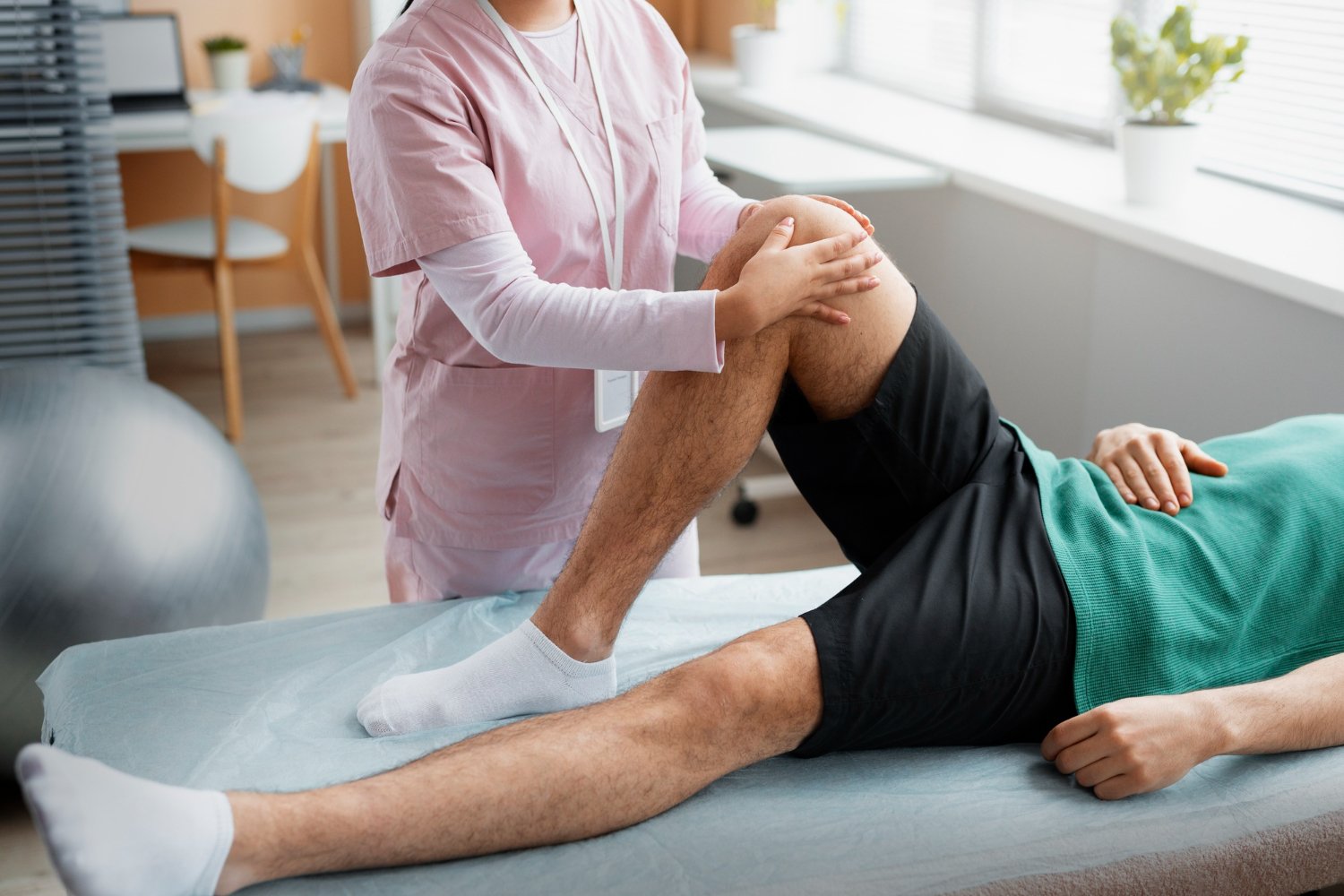
- Structured physical therapy to build up the muscles around the knee
- A brace for extra stability
- Cutting out pivot-heavy activity for a while
- Managing swelling and pain as things settle
Plenty of people live full, active lives with a partial ACL tear that was never operated on — as long as the surrounding muscles are strong enough to compensate.
When Surgery Makes Sense
For complete tears — particularly in younger, sport-active patients — ACL reconstruction is usually the recommended path. The torn ligament gets replaced with a graft, most often taken from your own hamstring or patellar tendon (sometimes donor tissue is used instead).
The good news is this is almost always done arthroscopically now — small incisions, a camera, minimal cutting. Recovery is noticeably easier than the older open-surgery approach.
What Recovery Actually Looks Like
People always ask for a timeline, so here’s a realistic one for surgical reconstruction:
| Phase | Roughly When | What’s Happening |
| Right after surgery | 0–2 weeks | Managing swelling, gentle motion exercises |
| Early rehab | 2–6 weeks | Getting range of motion back, light strengthening |
| Building strength | 6–12 weeks | Real strength training, balance work begins |
| Advanced training | 3–6 months | Agility drills, sport-specific movement |
| Back to sport | 6–12 months | Full return, but only after passing strength and stability testing |
That 9-to-12-month window before returning to competitive, pivot-heavy sport isn’t arbitrary caution — the re-tear risk for athletes who rush back is genuinely higher, even when the knee “feels” ready.
Life After Surgery — What Nobody Tells You
Physiotherapy isn’t optional here, even though patients sometimes treat it that way once the pain fades. It’s arguably the single biggest factor separating a good recovery from a mediocre one.
Most people get back to normal daily activity within a few months. Getting back to sport is a different, longer conversation — and it should be based on how the knee actually tests out, not just how many weeks have passed on a calendar.
Can You Actually Prevent This?
Not entirely — but the risk can be brought down meaningfully:
- Strengthening the hamstrings, quads, and hips
- Working on balance and proprioception (your body’s sense of joint position)
- Learning proper landing technique if you’re in a jump-heavy sport
- Following a sport-specific conditioning program — several have real data behind reducing ACL injury rates
- Not skipping the warm-up before intense activity
When Should You Actually Go See Someone?
Don’t wait it out if you notice:
- A pop followed by swelling
- Difficulty putting weight on the leg normally
- That “giving way” or unstable feeling
- Swelling or pain that isn’t improving after a few days
Getting checked early matters more than people realize — waiting too long can let other structures in the knee take on damage they didn’t need to.
IF You want ACL Injury Treatment in Indore visit here.
Questions People Usually Ask
Do I need surgery for an ACL tear? Not always. Partial tears, or a lower-activity lifestyle, can often be managed with rehab and bracing instead. It really comes down to how bad the tear is and what you want to get back to doing.
How soon can I walk normally after surgery? Most patients are walking with support within days, and without support in a few weeks. Getting back to sport-level activity, though, takes several months of structured rehab.
Will an ACL tear just heal on its own? A fully torn ACL won’t heal by itself — it doesn’t get enough blood supply for that. Partial tears can improve with the right rehab, but a complete tear usually needs reconstruction if you want full stability back.
Can the graft tear again? Yes, it can — especially if someone returns to sport before their strength and stability are actually where they need to be. This is exactly why rehab and functional testing before return-to-play aren’t just formalities.