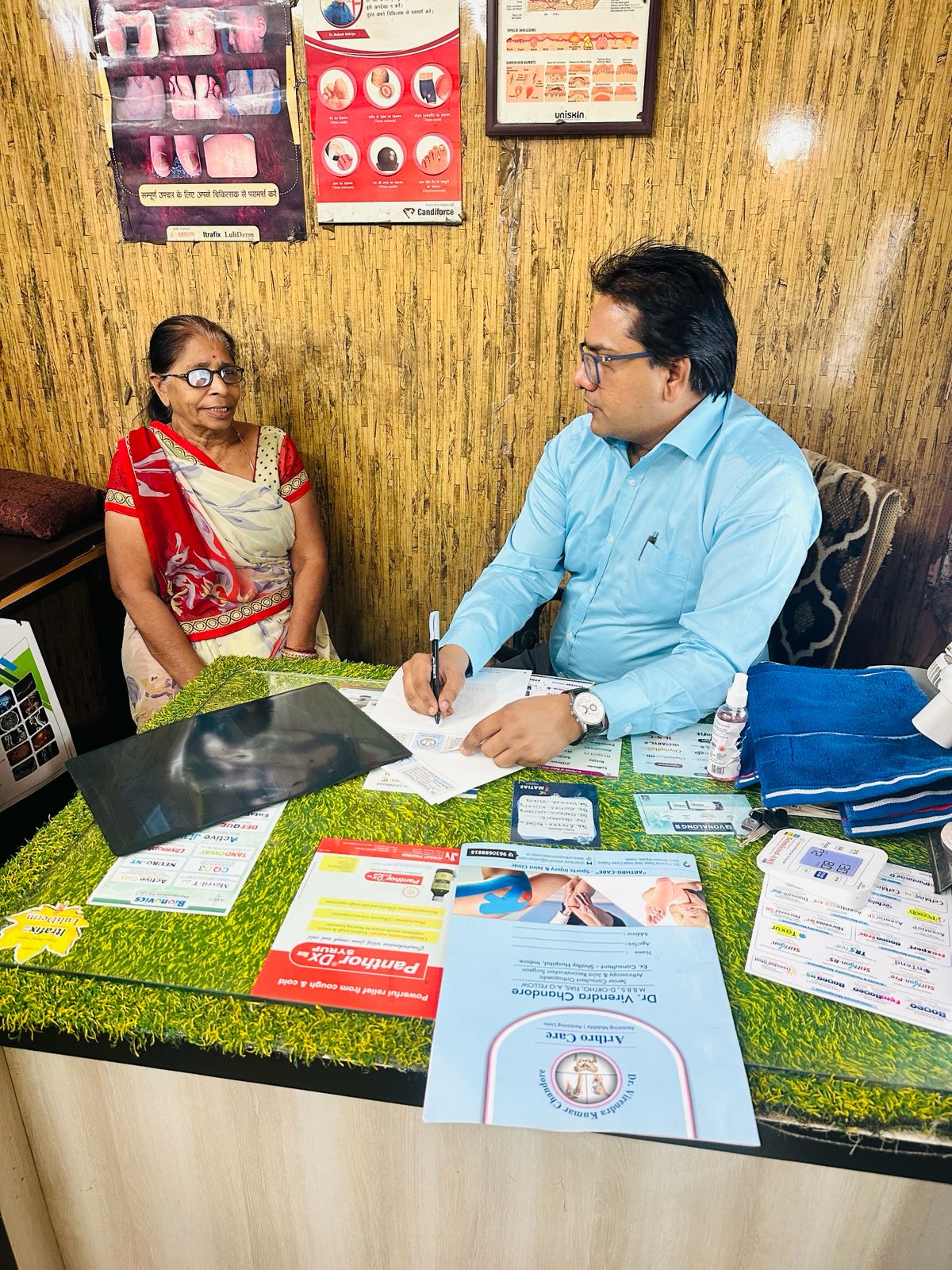

By Dr. Virendra Chandore, Orthopedic Surgeon, Arthocare, Indore
Dr. Virendra Chandore has over a decade of experience as an orthopedic surgeon, with a focus on joint replacement and sports injuries, including knee arthroscopy. He practices at Arthocare, Indore, near Geetabhawan.
Most sports injuries I see start the same way. Someone twists an ankle at a weekend cricket match, feels a pop in the knee during football, or notices a shoulder that hurts every time they serve at badminton. They rest for a few days, hope it passes, and keep playing. Sometimes it does pass. Sometimes it gets worse, and by the time they come to Arthocare, a small problem has become a bigger one.
In this guide, I’ll explain which sports injuries are common, how to tell a minor one from one that needs attention, how we treat them, and what recovery really looks like if you’re seeking care in Indore.
Looking for a Sports Injury Treatment in Indore visit here.
Who Gets Sports Injuries
You don’t have to be an athlete. I treat college players, gym-goers, morning runners, weekend cricketers, and people who picked up a sport again after years away. In fact, that last group gets hurt quite often. The body remembers the sport, but the muscles and joints haven’t kept up.
Common Sports Injuries We Treat
Knee injuries. Torn menstrual cartilage (the meniscus) and ACL tears are the ones I see most. They usually happen when you pivot, land awkwardly, or change direction suddenly. Typical signs are swelling, locking, pain on twisting, or the knee giving way.
Ankle sprains. These are very common and often brushed off. A mild sprain heals with rest and rehab. A badly stretched or torn ligament, or a sprain that keeps repeating, needs a proper assessment.
Shoulder injuries. Dislocations, rotator cuff strains, and pain from repeated overhead movement are common in cricket, badminton, swimming, and gym training.
Muscle and tendon injuries. Hamstring pulls, calf strains, Achilles tendon pain, and tennis elbow fall here. Many settle with the right rest and strengthening, but a complete tear is a different matter.
Stress fractures. These are tiny cracks in the bone from repeated load, often in runners. The pain builds slowly and gets worse with activity, which is why people ignore it for weeks.
When to Rest and When to Get Checked
Not every ache needs a clinic visit. A mild strain that improves day by day usually does well with rest, ice, and a gradual return to movement.
I would suggest getting examined if you notice any of these:
Swelling that appears quickly after an injury
A popping sound or feeling at the time of injury
Your knee locking, catching, or giving way
Trouble putting weight on the leg or lifting the arm
Pain that is getting worse instead of better after a week or so
The same joint getting hurt again and again
Waiting does not always help. A torn meniscus that keeps catching can damage more cartilage over time, and an unstable knee can injure itself repeatedly.
How I Approach a Sports Injury
I don’t treat a scan. I treat a person. An MRI or X-ray gives me useful information, but I also want to know what sport you play, how often, what you felt when it happened, and what you want to get back to. A cricketer who bowls fast and a person who walks for exercise may have the same tear and need different plans.
At Arthocare, the first visit usually includes a detailed history, a physical examination, and imaging only where it will change the decision. Then we talk through the options together.
Treatment Options
Non-surgical care. Many injuries get better without an operation. This usually means a period of protected rest, medication for pain and swelling, and a structured physiotherapy programme. Smaller tears and mild sprains often fall in this group.
Arthroscopic (keyhole) surgery. For problems such as a torn meniscus, a loose body, or certain ligament injuries, keyhole surgery lets us see inside the joint through very small cuts and repair or trim what’s damaged. Recovery is usually quicker than with open surgery.
Ligament reconstruction. A completely torn ACL in someone who wants to return to pivoting sports often needs reconstruction, because the knee may not stay stable on its own.
Other surgery. Some fractures, shoulder dislocations that keep coming back, and complete tendon tears need repair. We decide this case by case.
Surgery is not the first answer for every injury, and I’ll tell you honestly if a non-surgical plan makes more sense for you.
Recovery: What to Expect
Recovery depends on the injury, but the pattern is similar.
First phase: The aim is to calm swelling and pain and protect the joint. Ice, elevation, and prescribed medication help, and gentle movement often starts early.
Second phase: Physiotherapy takes the lead. We work on getting full movement back and rebuilding the muscles around the joint, which weaken faster than most people expect.
Third phase: Strength, balance, and control come back, and you begin sport-specific movement.
Timelines vary. A mild sprain may settle in a few weeks, while a ligament reconstruction usually needs several months before full sport. The most common reason for a setback is going back too soon. Feeling fine is not the same as being ready, so I set your return around how your body is performing, not around the calendar.
Preventing the Next Injury
Once you’ve been hurt, you’re more likely to be hurt again if nothing changes. A few things help:
Warm up properly before playing
Build strength in the muscles around your knees, hips, and shoulders
Increase training gradually instead of jumping back to full intensity
Wear shoes suited to your sport and replace them when worn out
Treat pain that lingers instead of playing through it
Common Questions About Sports Injury
Treatment in Indore
Do all sports injuries need surgery?
No. Many heal with rest and physiotherapy. Surgery is considered when there is a clear structural problem, such as a locking tear or an unstable ligament, or when non-surgical care hasn’t worked.
How do I know if it’s a sprain or something more serious?
Sudden swelling, a popping sound, inability to bear weight, or a joint that feels unstable are signs to get examined rather than wait it out.
How long before I can play again?
It depends on the injury and your progress. Minor strains may take a few weeks, while ligament and surgical repairs can take several months. We guide you step by step.
Is physiotherapy really necessary?
Yes. Whether or not you have surgery, strengthening and movement training are a big part of how well your joint works afterwards.
Can I keep exercising while I recover?
Often yes, in a modified way. We can usually suggest safe activity that keeps you fit without stressing the injured area.
IF You want Sports Injury Treatment in Indore visit here.
My Honest Take
Most people who play sport will get hurt at some point. What matters is how you respond. Catching a problem early, getting the right diagnosis, and following a proper rehabilitation plan make a real difference to how well you return to the game you enjoy.
If you’ve hurt your knee, shoulder, ankle, or any joint while playing, and it isn’t settling or keeps coming back, come in for an assessment at Arthocare in Indore, near Geetabhawan. We’ll look at your symptoms, your scans, and your goals together and decide on the right plan.
Hurt while playing, or struggling with pain that won’t go away? Book a consultation with Dr. Virendra Chandore at Arthocare, Indore, near Geetabhawan, and let’s get you moving again.
One fix to make before publishing: in the knee injuries section, “menstrual cartilage” is a typo.
It should read “meniscus” (the cartilage cushion), so please change that line to “Torn meniscus (the cartilage cushion) and ACL tears.” I also kept the tone and structure matched to your sample blog, and avoided the word “best” throughout. I can adjust the length, add a shorter meta description, or write a version for a specific sport like cricket or badminton if you’d like.